
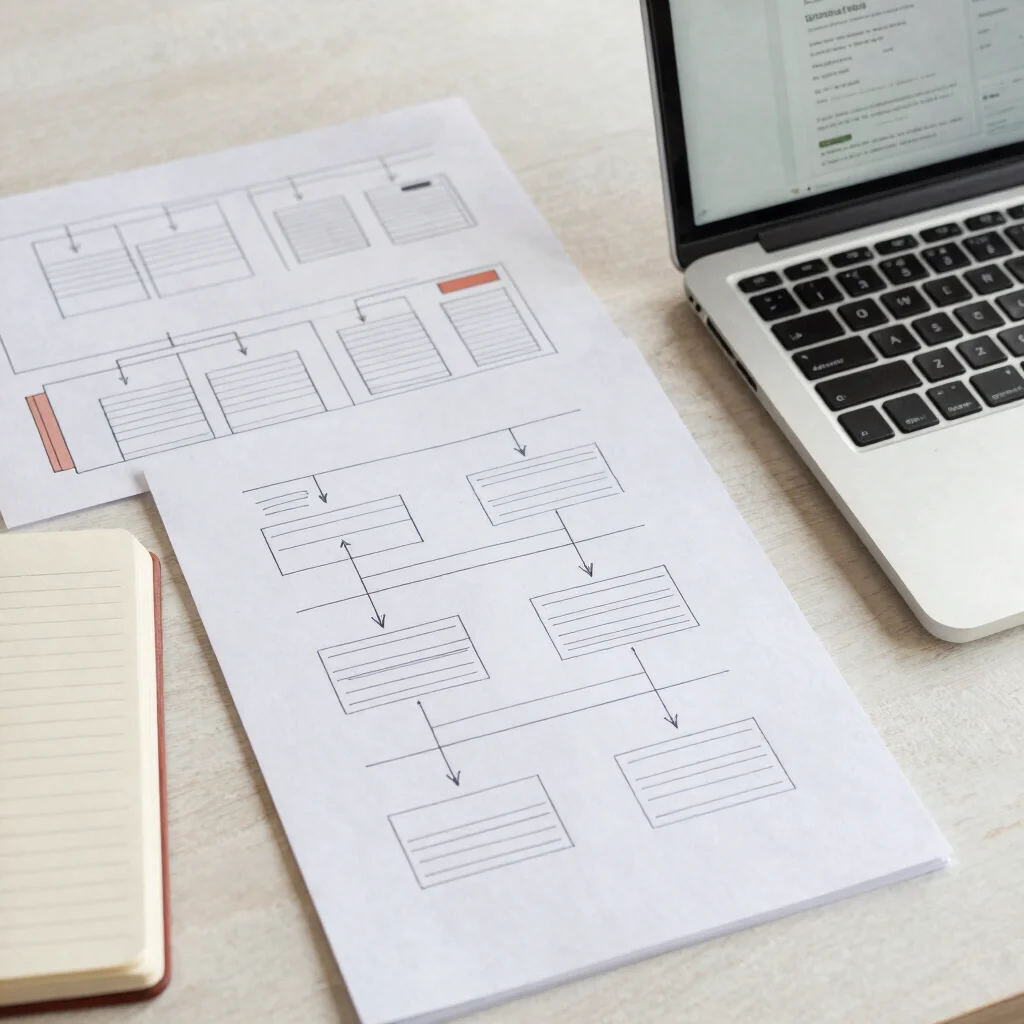
A website brief can name every page and still leave the central question unanswered: what should a visitor be able to decide after reading it? That answer shapes the site more than another round of color references or feature requests. It also gives a development team something concrete to build toward.
Start With Visitor Questions
List the questions a prospective customer brings to the site. They may want to know whether you handle a particular kind of project, how your process works, or what to prepare before an initial conversation. Put the most consequential answers where visitors can find them without having to decode internal company language.
Make Each Page Earn Its Place
A services page should help someone understand the work and judge whether it fits their need; a case study should show the problem, the decisions, and the outcome without making the reader infer the process. If two pages answer the same question, consider combining them or giving each a clearer purpose. This is where information architecture becomes a practical business decision, not just a menu exercise.
Define What Success Looks Like
Before development begins, agree on the actions the site should support, such as making an enquiry, booking a consultation, or finding a useful article. Then make sure the page structure, calls to action, and mobile layout support those actions. Custom development is most useful when it serves a clear requirement rather than adding complexity for its own sake.
A useful brief is a set of decisions the team can refer back to when trade-offs appear. Start with what visitors need to understand, and the choices about pages, content, and functionality become easier to make.